Flea Problem in Cats

Share |

The ultimate guide on Flea in cats

This article is written by an experienced cat owner and is based on deep research from trusted sources. It is for informational purposes only and is not a substitute for professional veterinary diagnosis, treatment or medical advice. Always consult your veterinarian promptly if you have concerns about your cat’s health.Read More

Fleas might be tiny, but for cats, they are a big deal. These little parasites don’t just cause itching they can lead to skin infections, allergic reactions, and even serious health issues if left untreated. And because they multiply so fast, one missed flea can turn into hundreds before you know it and can turn a happy , relaxed cat into an itchy, restless overnight.

For new cat owners or those fostering cats, dealing with fleas can feel confusing and stressful. Between countless treatment options, safety concerns, and mixed advice online, it’s hard to trust what truly works. That’s why understanding the flea problem from the start how it begins, what it does to your cat, and how to stop it for good is mandatory.

In this guide, you’ll learn how to identify fleas early, treat them safely, and prevent them from coming back, all with simple, vet-backed steps that actually works and solve your problem

What are cat Fleas

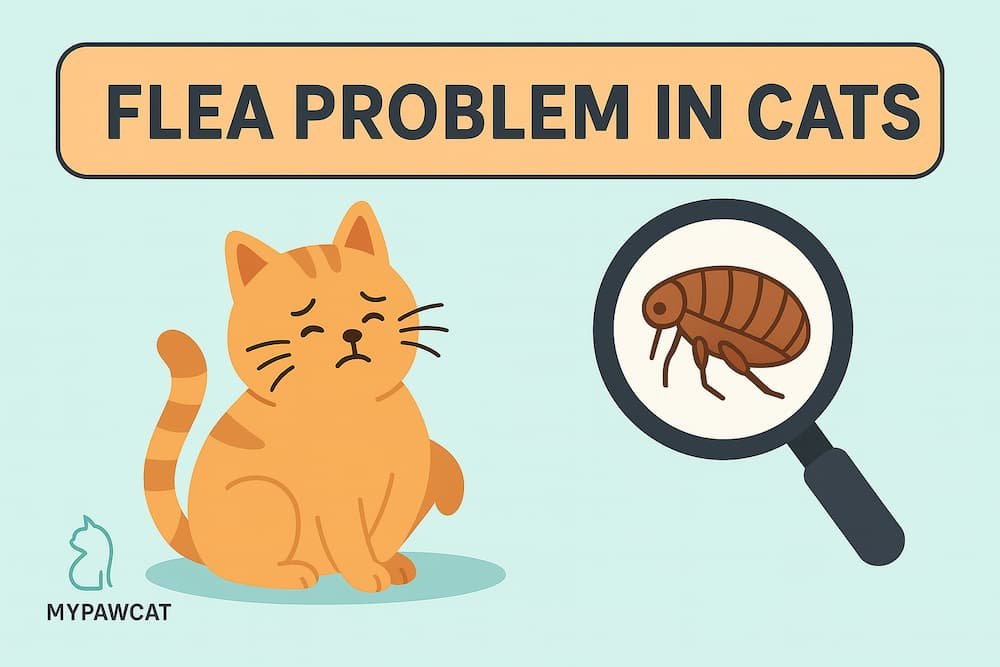
Cat fleas are an external parasite that feed on the blood of mammals and insects. Fleas belong to an order with about 2200 species, and the species most commonly found on cats is Ctenocephalides felis. These parasites are tiny, dark, wingless, blood-sucking insects with powerful hind legs that enable incredible jumps. They typically live in a host’s fur, biting to feed and then lay eggs, i.e., a female adult flea can lay up to 20 or more eggs per day that also fall into carpets and bedding, making them difficult to control.
 

cat flea visual guide   

Fleas on Cat: Appearance & Sign

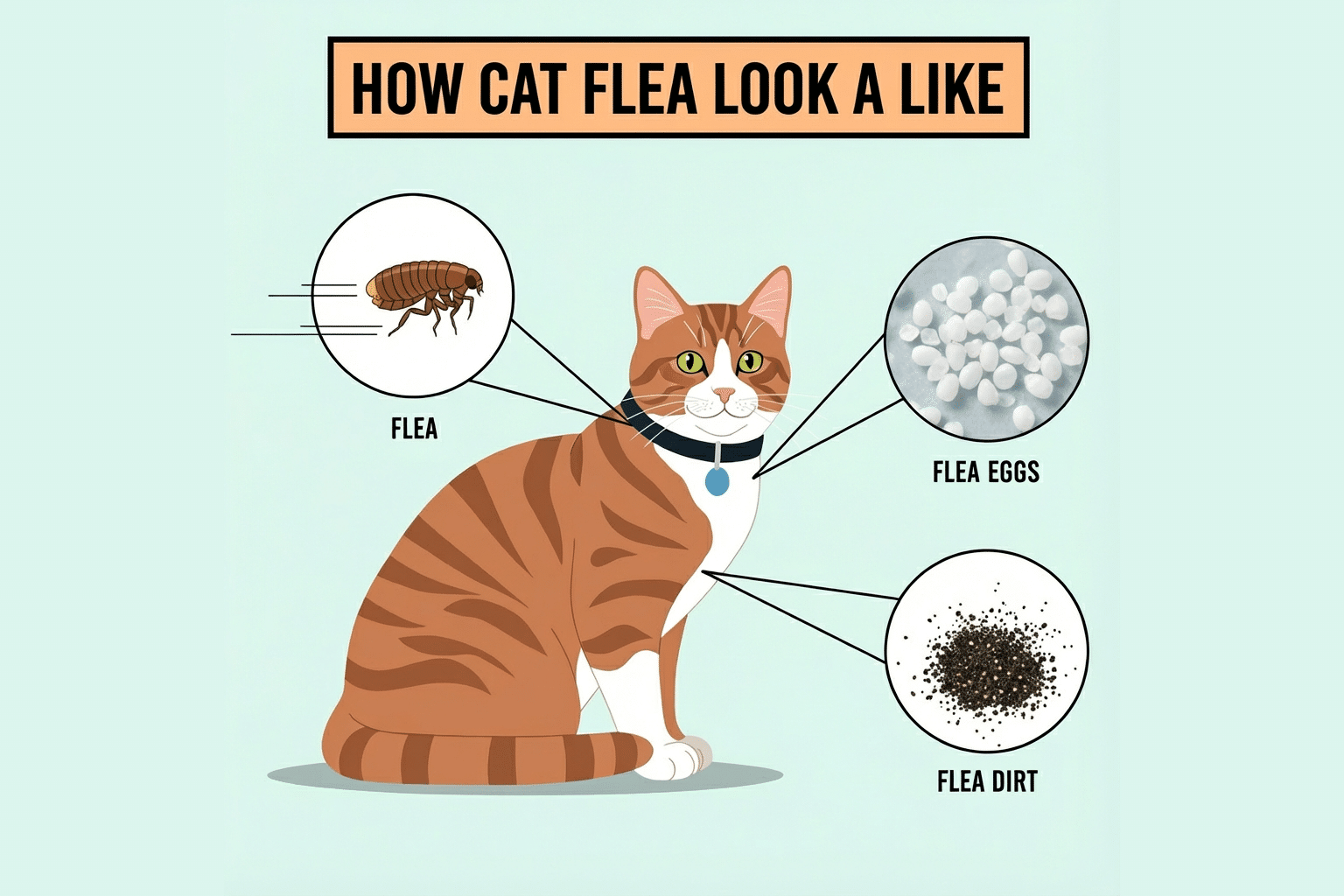
Fleas on cats look like tiny sesame seeds (1–3 mm or about 1/8 inch), dark brown to reddish-brown, and flat from side to side. They move very fast, often jump quickly and disappear, and are usually found close to the skin around the neck, back, belly, and base of the tail.

Signs: You may notice sudden flinching or twitching as fleas move on the skin, along with scratching, licking, or biting irritated spots. Red bumps or scabs often appear, especially around the neck, back, or tail. A cat may seem restless or sensitive when touched, and tapeworm infection can also occur as a result of flea ingestion.

Flea Eggs on Cat: Appearance and Sign

Flea eggs on cats are small, whitish, oval specks and very tiny, like grains of salt (around 0.5 mm). They are white or clear, oval, smooth, and shiny in appearance. Unlike other parasites, flea eggs are not sticky, so they easily fall off into bedding, carpet, or couch. They don’t stick to fur like lice eggs do. If you see tiny white grains near the fur roots or on the cat’s bed, those may be flea eggs.

Flea Dirt on Cat: Appearance and Sign

Flea dirt looks like tiny black specks, similar to pepper grains or coffee grounds, commonly found in your cat’s fur especially around the tail base, belly, and neck. One key sign is that flea dirt turns red when wet because it contains digested blood. You may still find flea dirt even if no live fleas are visible, and it can also appear as black dust on your cat’s bedding, furniture, or on a comb after brushing.

How to Tell If Your Cat Has Fleas

To check whether your cat has fleas or not, look for these behavioural, physical, and environmental clues. Even if you don’t see live fleas, these symptoms strongly indicate an infestation and require rapid action.

Behavioral Signs

Intense Scratching or Biting: Your cat keeps scratching, biting, or licking certain spots.
Restlessness: They seem irritated, unable to relax, or keep changing positions.
Overgrooming: Excessive licking that leads to bald patches or irritated skin.
Sudden Skin Twitching: Quick flinches or spasms when fleas crawl or bite.

Physical Signs on the Body (Check These Areas)

Focus on the neck, base of the tail, belly, and groin, where fleas hide the most.

Live Fleas: Tiny, dark brown insects that move fast and jump quickly.
Flea Dirt: Black pepper-like specks. When placed on a damp paper towel, they turn reddish-brown because it’s digested blood.
Skin Irritation: Red bumps, scabs, or crusty spots from flea bites or scratching.

Hair Loss: Thinning fur or bald spots, especially on the back and tail area.

Environmental Signs

Flea Eggs: Tiny, white, salt-like grains that fall off into bedding, carpet, or your cat’s sleeping spot.
Flea Dirt on Bedding: Black dust on blankets, furniture, or where your cat sleeps.
Tapeworm Segments: Small white rice-like pieces near the anus, a common flea-related symptom.

How to Confirm Fleas

Use a Flea Comb: Run a fine-toothed comb through the fur, close to the skin.
Check the Comb: Look for live fleas, flea dirt, or tiny white eggs.
Wet Paper Towel Test: Rub black specks onto a damp tissue. If it becomes reddish-brown, it’s flea dirt → confirms fleas.


If you spot fleas, flea dirt, or any combination of scratching + hair loss + red bumps, your cat likely has fleas and needs treatment.

Cat Flea Treatment: Practical Guide

cat flea treatment

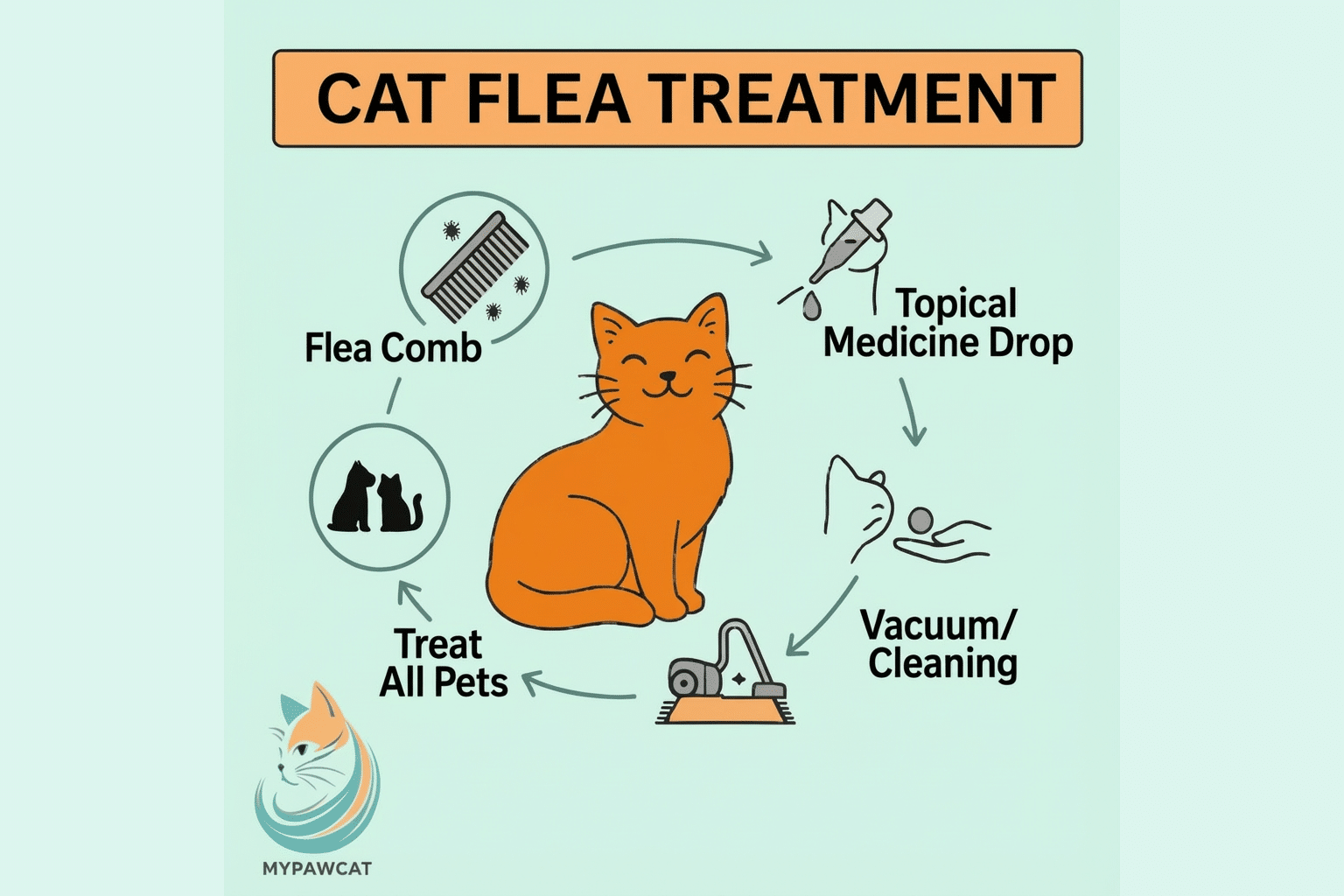
Effective treatment and future flea control work on three factors: the pet, all other pets in the house, and the environment. Remember that 95% of the flea problem is in the environment (eggs, larvae, pupae), so treating the home is as important as treating your cat for long-term solutions and preventing reinfestation.

Key principles:

There are several principles which have to be followed if you want long-term progress.
Consistency is key: Strictly follow the treatment schedule, e.g., monthly spot-ons or as directed by the product/vet, even if you don’t see fleas.
Treat ALL pets at once: Treat every cat and dog in the household simultaneously to prevent reinfestation cycles.
Environmental treatment is crucial: Vacuum daily, wash bedding, and use environmental products when needed because most of the population lives off the pet.
Don’t rely solely on home remedies: Avoid unproven or potentially harmful home cures. Use vet-approved products.

Safe application techniques: Part the fur and apply spot-on directly to the skin, keep the cat from licking until the product dries, and never use dog-only products on cats.
Regular grooming: Brushing and using a flea comb help detect fleas early and remove some flea dirt and adult fleas.

Instant / immediate Relief

Flea comb: Best first step for diagnosis and physical removal of fleas.
Flea shampoo: Use a vet-recommended flea shampoo for immediate knockdown (short-lived).
Natural ingredients: Apple cider vinegar, lemon, cedar oil, diatomaceous earth, and coconut oil are used as repellents and as ingredients in sprays but should not replace vet products. Avoid unproven DIYs that can harm your cat.

Topical treatments

Vet-prescribed spot-on products are frontline options for the treatment of fleas. Revolution, Frontline Plus, and Bravecto Topical Solution are effective when used correctly and consistently. Always follow label directions and vet advice before applying.

Oral treatments

Fast-acting oral options for adult flea kill: Capstar, Comfortis, and Credelio are very useful for immediate adult flea removal or when topical use isn’t appropriate. Always use under vet guidance.

Collars

Seresto collars are recommended which can provide months of protection but have safety considerations (fit, age limits, monitoring). Consult your vet about collars for kittens, multi-pet homes, or pets with skin sensitivities.

Environmental treatment (home)

Household flea sprays/foggers (examples: Virbac Indorex, Adams Plus) help treat eggs/larvae in carpets and upholstery.
High-efficiency vacuum cleaner — vacuum daily, then empty the vacuum outside.
Wash bedding on the hottest safe cycle and treat pet resting areas.

Professional help & telehealth

If infestation is heavy, you’re unsure which products are safe (kittens, pregnant/nursing cats, sick pets), or treatments aren’t working, use reputable online vet consult services/telehealth platforms to get professional advice quickly.

Conclusion

Fleas are multiplied fast, spread easily and won’t go on their own. But flea free home is achievable through consistent treatment, environmental cleanup, and regular preventive care, you can protect your cat from discomfort, skin issues, and future infestations throughout the year.

Frequently Ask Question (FAQs)

Can Cats die from flea infestation:

If not treated timely, flea can belief threaten because fleas have a huge nuisance. Fleas are also become the reason of significant diseases like anaemia that can affect cats of all ages specially kittens, other included plague, tularaemia or tapeworms often occur after few weeks of flea infestation.

Can indoor cats get fleas?

Yes, indoor cat also gets fleas as any other cats. Fleas’ cam easily jumps to cat from another pets, outdoor source like from guest, humans in the home, rodents, places of your cat visit and moving to new home. They can rapidly spread, when feeding on a host animal , lay up to 20 or more eggs in a single day.

How to get rid of cat fleas without bathing?

You can get rid of cat fleas without bathing by using veterinarian approved topical treatment or oral medicine along with environment control. You can also use flee comb to physical removal of fleas for immediate relief without any stress.