
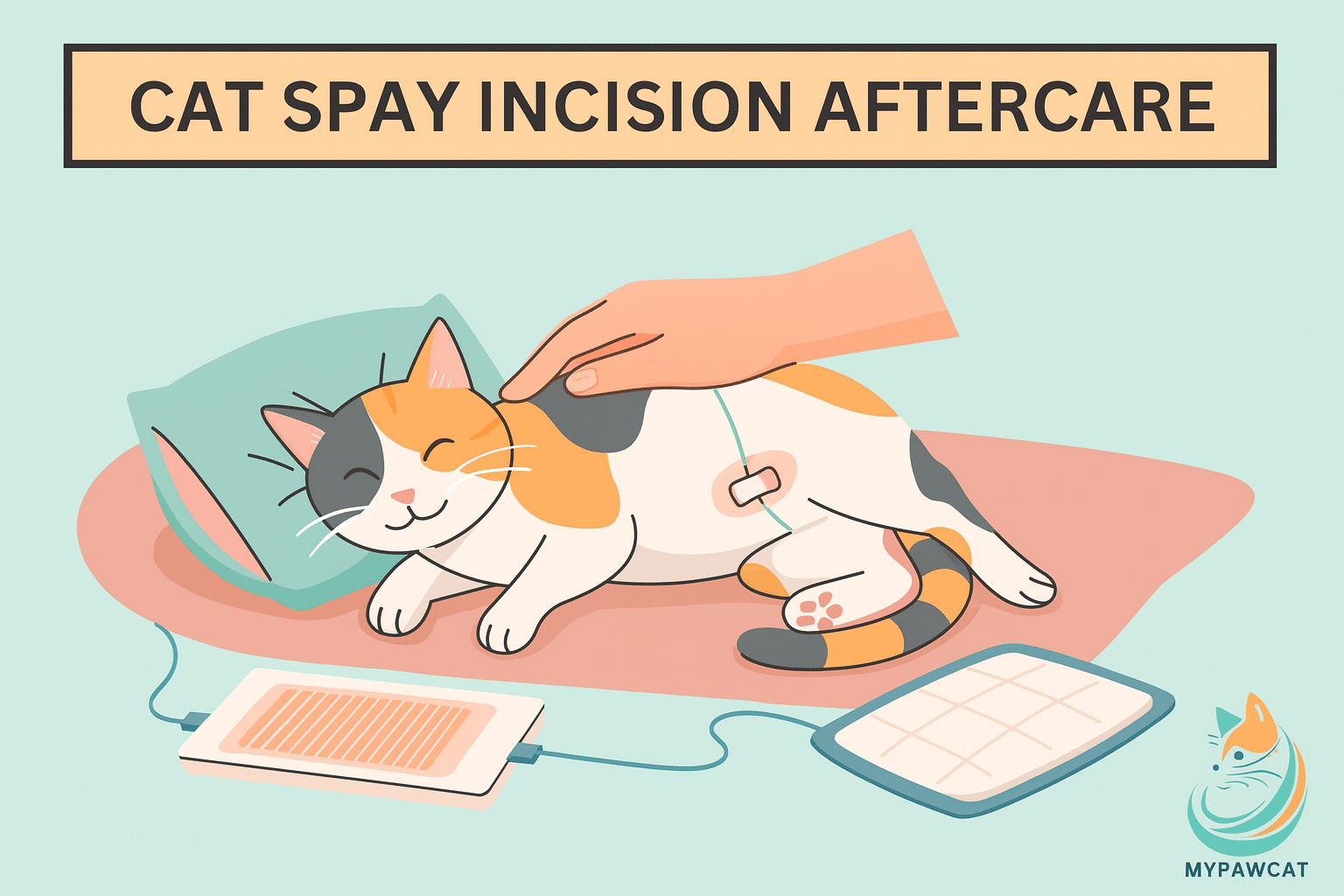

As a loving cat owner, bringing your feline friend home after spaying surgery can be a mix of feelings, relief and worry. You are relaxed now as she is safe, but your eyes are stuck on the incision, thinking, Does she feel fine? Does she feel pain? Is the redness normal? When should I start worrying? Am I doing everything right? All these questions and the fear of missing a critical sign can be overwhelming and keep most devoted parents awake at night
Just imagine, though, a situation where you confidently observe her condition, recovery progress, knowing what to look for and when to ask for help. The guide is here, in which you can understand everything with clarity.
It will equip you with all the necessary knowledge, including every stage of the healing process, from the initial stage to full recovery, detailing normal appearances, identifying red flags, and providing actionable diagnostic tips. With insights backed by experts, you can rest assured knowing you’re providing the best care possible for your cat.
Table of Contents
ToggleUnderstanding the Feline Spay: Procedure & Initial Recovery
Before jump to incision care, it’s necessary to understand what your cat has going through. This section explains about the feline spay, benefits, incision site and overall process.
What is Feline Spay?
A feline ovariohysterectomy is surgical process in which ovaries and uterus removed from female cat’s body performed under general anesthesia. This procedure involves typically a small incision on the abdomen, just below the navel. Generally, recover in 10-14 days for the external incision to heal, with internal healing continuing longer.
General Specification:
Spaying is most effective in kittens and young age but can be done at any age, minimum 12weeks. Weight should be around 3ponds.Cat/kitten history of any disease or infection should be consider before surgery in order to prevent any post-surgery complications.
Benefits:
Prevents Unwanted pregnancy, eliminates heat cycles to stop behavioral changes related to mating & aggression, reduces risk of certain cancers like mammary tumors and help to eliminate risk of life-threatening uterine infections.
Initial Appearance of Normal Cat Spay Incision:
After cat or kitten spay incision, it is crucial to know what it looks like to reduce stress and understanding for better post-operative care of your feline friend.
Immediate post operative appearance (1-3days) after surgery, incision typically 1-2 inches long, straight, and neat with external stitches, usually non-dissolvable, may be visible with a clear or purplish adhesive covering the incision line. Internal stitches are not visible because its inside the body.
Mild redness and slight swelling appear along with incision line due to tissue trauma; small amount of bruise also present around the incision area and minor skin irritation also present where fur was shaved.
Note: Variations in immediate post operative looks depends on Vet technique and the individual cat
The Healing Journey: Day-by-Day & Week-by-Week Progress
Healing is a dynamic process; all cats heal at a slightly different pace but the stages below remain same for normal incision healing look alike. Use this guide for your feline recovery with in touch to your Vet.
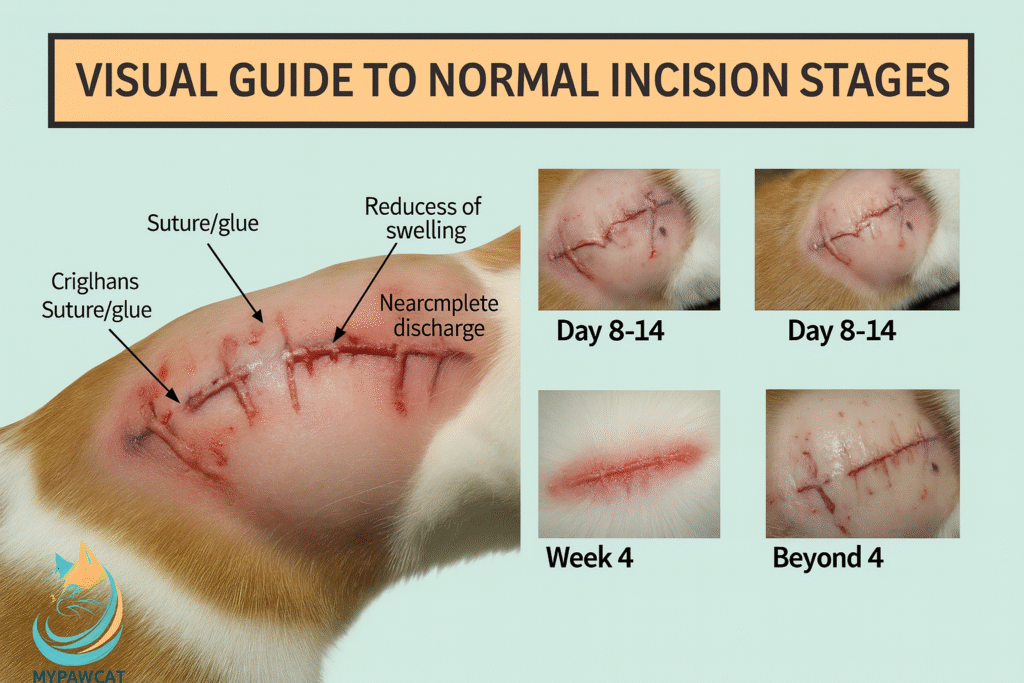
Day 1–3: The Initial Stage
Incision Appearance (Normal): Slight redness and mild swelling with neat edges. A small amount of clear or pinkish discharge may be seen, but no foul odor.
Cat’s Behavior: Grogginess from anaesthesia, cat often rested, mild discomfort, and reduced appetite.
Key Considerations: Prioritize pain management and restrict activity. Monitor closely for any post-anesthetic effects.
Day 4–7: Early Healing
Incision Appearance (Normal): Redness and swelling begin to subside. Edges are well-approximated and discharge become minimal to zero.
Cat’s Behavior: Appetite returning to normal, more alert, possibly more active then early stage.
Key Considerations: Keep activity restricted even if energy levels rise. Maintain consistent medication and monitor for changes.
Week 2 (Day 8–14): Advanced Healing & External Closure
Incision Appearance (Normal): Redness and swelling are minimal. The incision looks like a thin pink or light red line. Scabbing may flake off. Dissolvable sutures are working internally, and external sutures or staples are often removed at this stage.
Cat’s Behavior: More active and returning to normal routines.
Key Considerations: Attend the suture/staple removal appointment if applicable. Allow gradual increases in activity, but continue monitoring closely.
Expert Tip: Understand whether your cat has dissolvable internal stitches, external sutures, or surgical glue, as this affects care instructions.
Week 3–4: Scar Tissue Formation & Full Physical Recovery
Incision Appearance (Normal): The incision line fades to pale pink or white. Any firmness under the incision is likely scar tissue.
Cat’s Behavior: Physically recovered and resuming all normal activities.
Key Considerations: Monitor for late-onset issues such as swelling or discharge. By now, the incision should be nearly invisible.
Beyond Week 4: Long-Term Healing
Incision Appearance (Normal): Fully healed and appearing as a faint, thin line—sometimes difficult to locate.
Cat’s Behaviour: Complete return to pre-surgery activity levels.
Key Considerations: Only occasional checks during grooming are needed.
Signs of Healthy & Healing Incision:
Knowing about positive indication of healthy incision provide you a peace of mind because it indicates the smooth recovery of your feline friend. Following are the key indicators of healthy healing process to watch for:
Area of Incision: Area around incision should remain free from moisture, pus or heavy crusting. A clean & Dry incision indicates the wound healing normally.
Edges of Skin: The skin edges are well approximate, should be neatly together without gaps or openings. This shows proper closure and prevents infection risks.
Redness/Pinkness: Mild redness or a pale pink color is normal, but it should not be bright red or not intensify over time.
Swelling: Slight puffiness directly along the incision line is common, but it should not be hard, hot, or quickly increase in size.
Odor: No foul odor appears because a healthy incision has no discernible smell.
Discharge: There should be no sign of oozing pus, blood, or watery fluid. A dry incision can be a sign of healing.
Cat Behavior: While some mild discomfort is normal, your cat should not be excessively licking, biting, or showing signs of severe pain when the area is gently observed (not touched).
Gradual Improvement: Each day, the incision should look slightly better, less red, less swollen and closer to closed. Steady improvement is the best reassurance of recovery.
Recognizing these healthy signs helps ease anxiety for worried owners. With daily checks and reassurance, you’ll know your cat is healing well.
Red Flags: When to Call a Vet
This is the most critical section for worried owners to see any red signal in smooth recovery process. Clear and urgent guidance is essential to understand these red flags and future consideration to cop this situation.
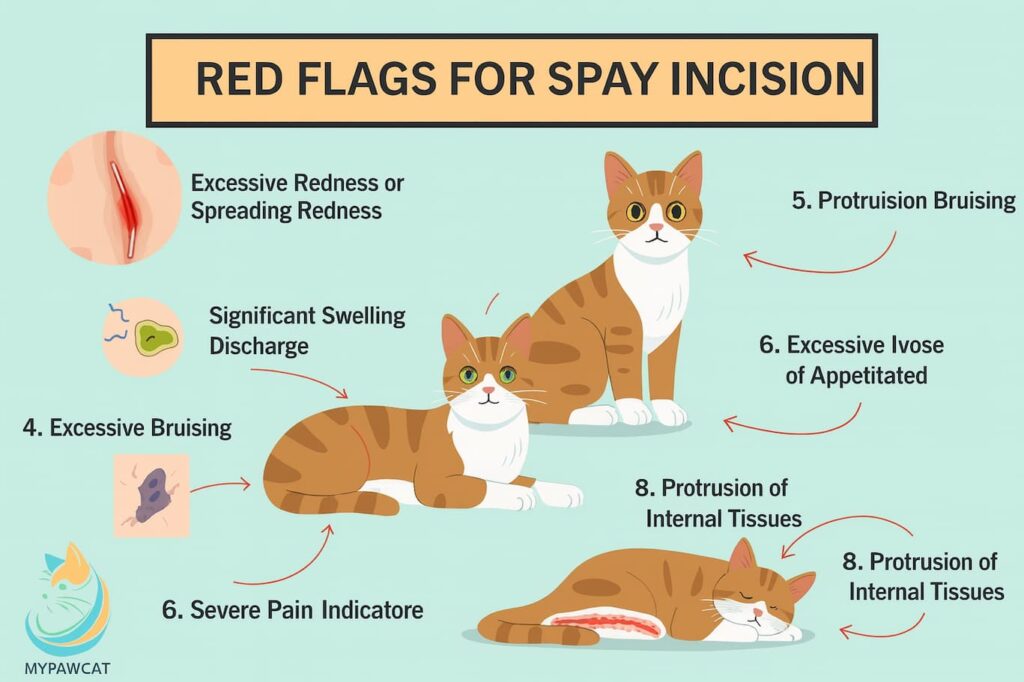
Excessive Redness or Spreading Redness: If you observe more than a faint pink line, or redness that is spreading away from the incision. This could indicate the severe infection or inflammation so call a vet to discuss the issue.
Significant Swelling: Any swelling that is rapidly increasing, feels firm and hot, or extends far beyond the incision line. Urgent Vet visit required due to possible sign of potential seroma, hematoma, or infection
Pus or Foul-Smelling Discharge: Yellow, green, white, or bloody discharge with an unpleasant Odor. This is a strong indicator of infection. Emergency vet visit because its a Clear sign of severe infection.
Incision Opening/Dehiscence: Any part of the incision separating, gaping open, or revealing underlying tissue. Emergency vet visit needed, risk of evisceration and severe infection.
Excessive Bruising: Large, dark, or rapidly expanding bruising around the site.
Bleeding: Active bleeding or persistent oozing from the incision suture failure or internal bleeding so emergency vet visit required.
Severe Pain: Your cat cries, hisses, bites, or reacts strongly to any attempt to examine the incision, or is unusually withdrawn/aggressive. Urgent vet visits required , could be an abscess, hernia, or serious fluid accumulation
Lethargy, Loss of Appetite/Thirst: A sudden and persistent decrease in energy, refusal to eat or drink, vomiting, or diarrhoea can indicate systemic issues.
Monitor Appetite & Hydration: Ensure your cat is eating and drinking normally. A sudden decrease can be a sign of discomfort or a complication.
If your cat feels unusually warm, or if instructed by your vet, take her temperature (normal feline temp is 100.5-102.5°F or 38.1-39.2°C).
Digital Rectal Thermometer recommended for monitoring the cat’s temperature if fever is suspected or advised by the vet.
Protrusion of Internal Tissues: This is an absolute emergency and requires immediate veterinary attention because it indicate the wound is not help properly, chances of more injury and infection possible.
Comprehensive Post Operative Care Checklist:
-
Activity Restriction:
Rest is important for proper incision healing. Cats are agile and curios by nature so it is your responsibility to create a safe, calm environment during recovery. Closely supervision is necessary, especially during the first few days, to prevent over-activity.
Limit Movement: Restrict jumping, climbing, and strenuous play for entire recovery period. Even small burst in activity can strain the incision.
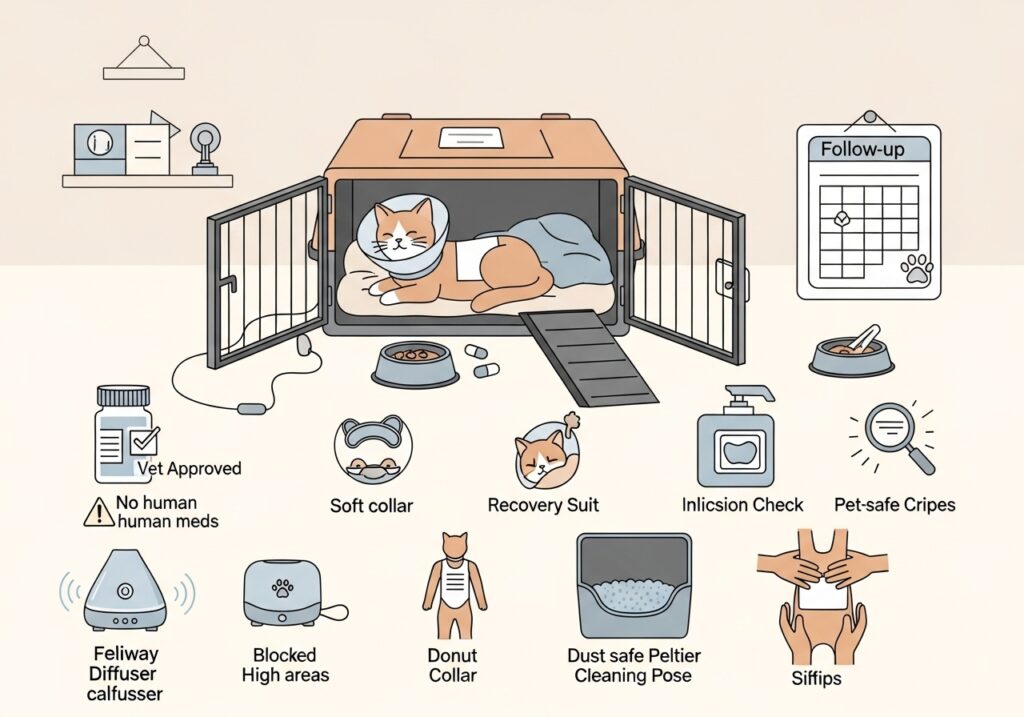
Create a Recovery Zone: Designate a quiet, confined space for example a large dog crate or small room, where your cat can rest without the temptation to leap or climb.
Provide soft, washable bedding to keep the area comfortable and hygienic. A clean resting spot supports both healing and peace of mind.
Block access to high places, use ramps for lower access for safer movement, or temporarily remove tempting items to prevent setbacks.
-
Prevent Licking & Chewing:
This is a worst enemy of incision because Licking introduces bacteria, causes irritation, and can open the incision.
Use E-collars (Cones of Sham), Essential for most cats. Ensure it’s the correct size and comfortable. If not available use alternatives of the collars.
Alternatives to E-collars:
Soft Recovery Collars: More comfortable, but may not be as effective for determined lickers.
Inflatable Collars: Donut-shaped, less obstructive than traditional cones.
Recovery Suits/Medical Pet Shirts: Full-body suits that cover the incision.
Distraction Techniques: Use other techniques to distracts concentration towards licking. Engage your cat with toys or puzzle feeders to provide mental stimulation and distraction from the incision, especially for active cats
Distraction, Not Just Restraint: If your cat is obsessively licking, try engaging her with a new toy or puzzle feeder in addition to protective gear, to redirect her attention
-
Pain Management:
Give all prescribed pain medications including exactly as directed by your vet, even if your cat seems fine, to ensure continuous comfort and aid healing. Always look for signs like hiding, decreased appetite, aggression, or reluctance to move and consult your vet if persist.
Never give over-the-counter human pain medication. Always consult your vet if you suspect your cat is in pain.
-
Maintaining Food & Hydration:
Ensure consistent access to fresh water. Offer small, frequent meals of easily digestible food if she was nauseous post-op. Hydration and nutrition are vital for healing. Gradually return to her regular feeding schedule as tolerated.
Ensure your cat is eating and drinking normally. A sudden decrease can be a sign of discomfort or a complication.
Environmental Management:
Manage Stress: Keep the environment quiet and calm, minimize loud noises and excitement which can help reduce stress and calm atmosphere Use Feliway Diffusers/Sprays to help reduce stress and promote a calm environment during recovery.
Maintain Cleaness: Keep recovery area clean. Do NOT apply anything to incision unless directed by vet. Reduces infection risk. Use Pet-Safe Cleaning Wipes/Solutions for general area. Change bedding frequently.
Incision Check: Gently inspect incision 2-3 times daily, from a distance if possible. Look for changes in color, swelling, discharge. Always Observe from Afar: Resist constant prodding. Only handle for medication or close inspection
Gentle Handling: Always support your cat’s body, especially the abdomen, when lifting or moving her to prevent strain on the incision. Cradle their bottom and chest to distribute weight, avoiding incision pressure.
Litter Box Preference: Use dust-free litter (e.g., paper pellets) for 10-14 days to prevent particles from contaminating incision. Keep litter box pristine to encourage use and prevent reluctance.
-
Follow-Up Appointments:
Attend all scheduled follow-up appointments with your vet to ensure the incision is healing properly and to have stitches/staples removed if necessary.
Conclusion:
Managing and care of your cat’s post-spay recovery can feel like a difficult task, but with the right strategy and a watchful eye, you can ensure her comfort and a swift return to her happy, healthy self. Remember, you are her best advocate. By carefully monitoring her incision, stuck to your vet’s instructions, and knowing the signs that signals concern, you’re providing the best possible care to your feline friend.
Don’t hesitate to reach out to your veterinarian with any questions or worries if you noticing unusual, they are your primary resource throughout this important healing journey.
Trust on you and your process, make sure to follow all instruction with peace of mind that comes with knowing you’ve done everything to support your beloved feline’s recovery.
Frequently Ask Question:
How long does it take for the incision to heal?
External healing typically takes 10-14 days. Internal healing can take up to 4-6 weeks if any complications not occur although time period may differ.
Is a small lump under the incision normal?
A small, firm lump is often normal scar tissue or dissolving sutures. Monitor for growth, pain, heat, or discharge if you noticed anything consult vet to seek help.
My cat isn’t eating/drinking much. Is that normal?
Some reduced appetite is normal for 12-24 hours post-op. If it persists longer, or is accompanied by other symptoms, contact your vet.
When are the stitches removed?
If external stitches/staples were used, they are typically removed 10-14 days post-op. Dissolvable sutures do not require removal, its dissolve automatically with time.
My cat is shivering/trembling, is this serious?
Mild shivering can be from anaesthesia recovery. Persistent shivering, especially with lethargy or pain, warrants an immediate vet call because its indicates a serious issue.